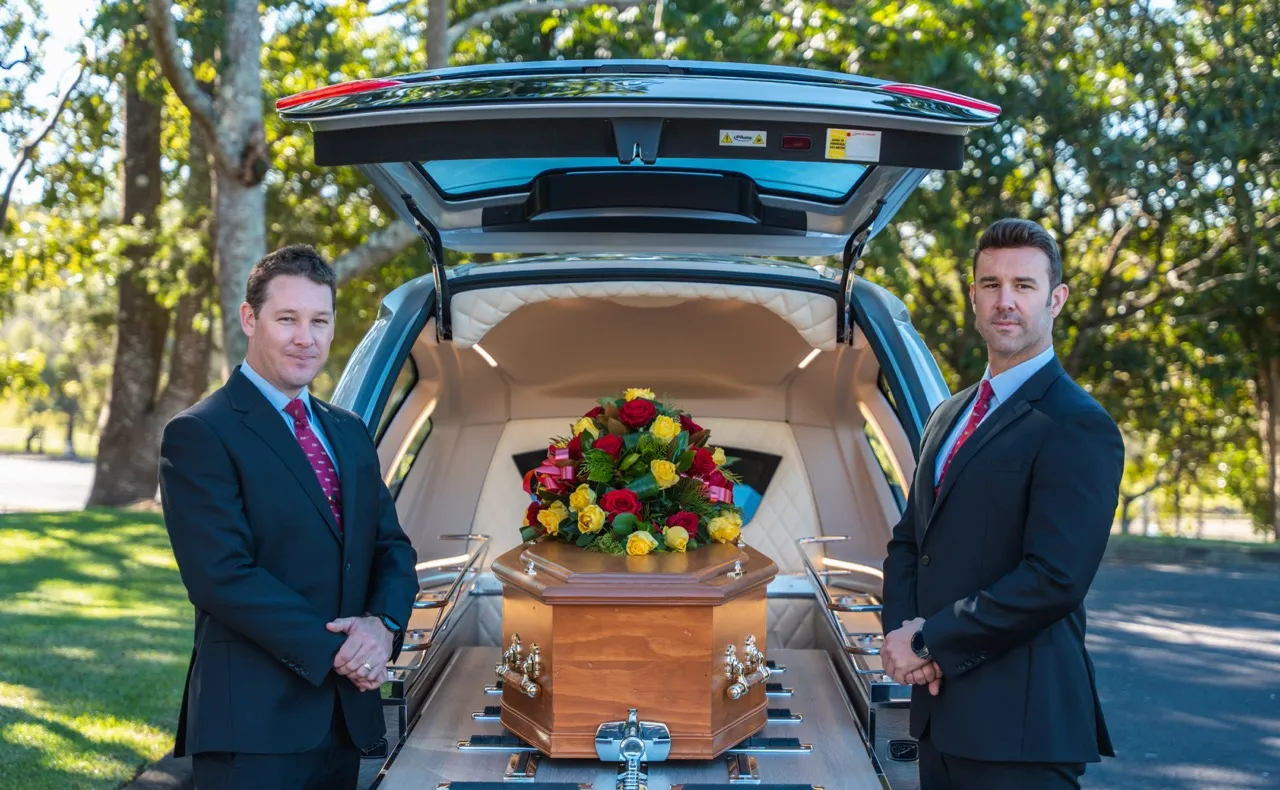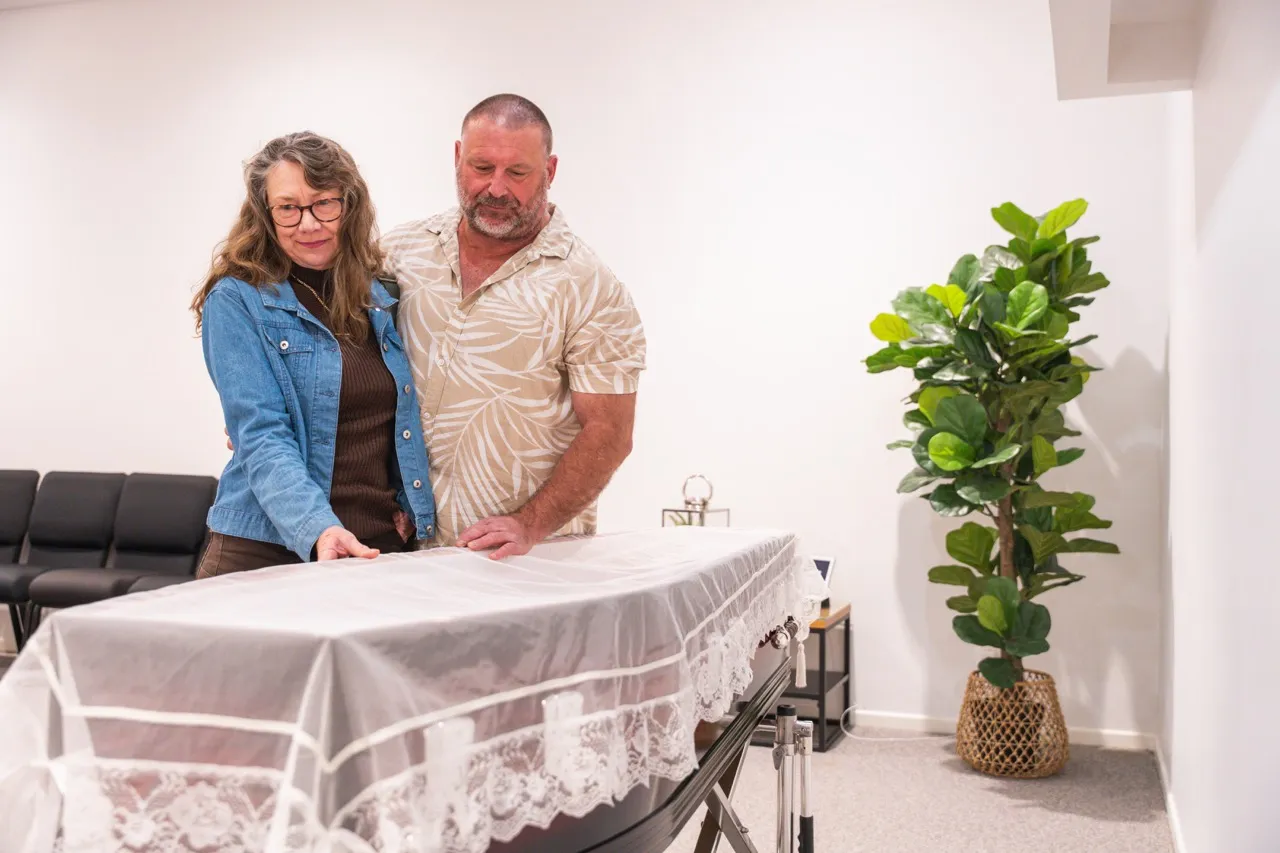
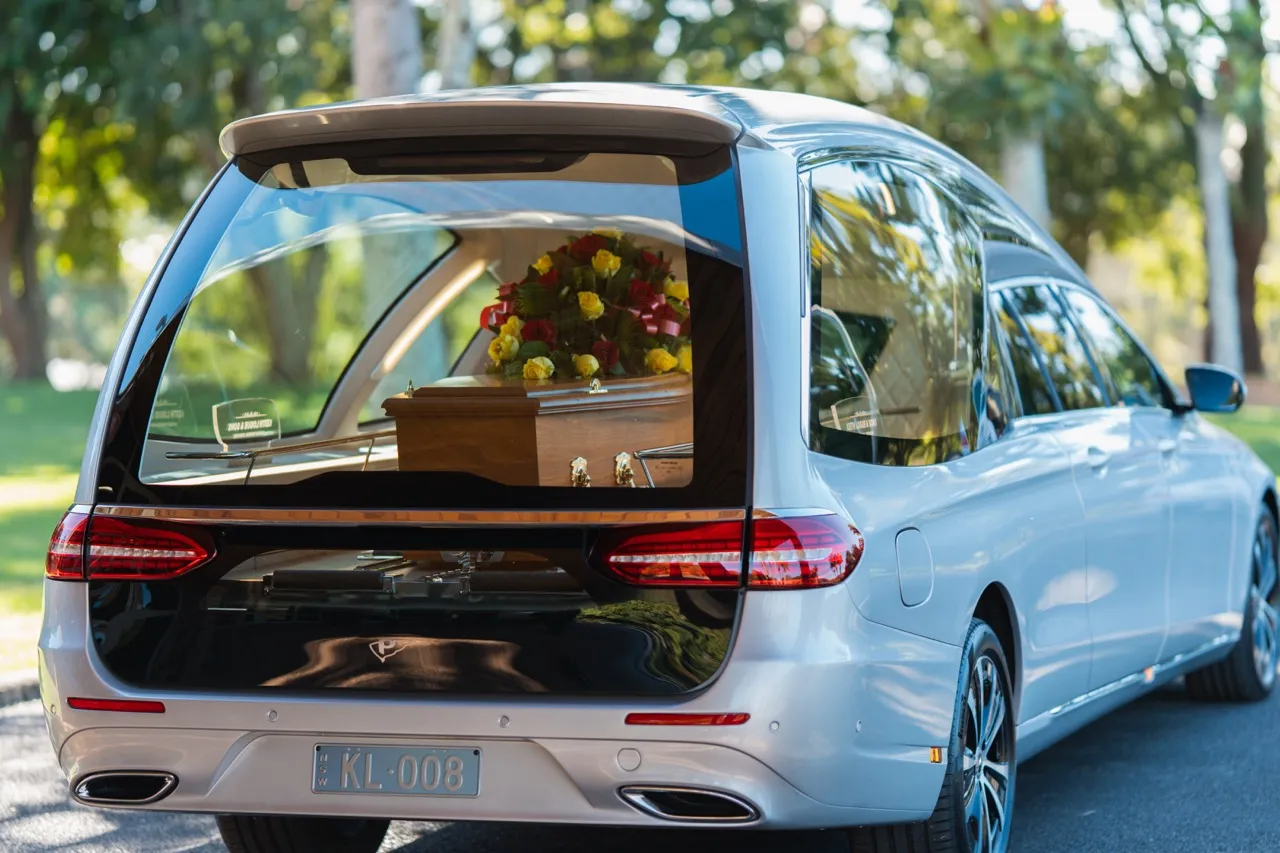
A pallbearer helps carry or escort the coffin at a funeral. There are usually six, and you do not need experience, particular strength or a formal role in the family to do it. Our team briefs everyone beforehand, walks with you the whole way, and takes the weight if anything feels difficult. If carrying is not right for you, being an honorary pallbearer or taking another role is just as meaningful.
This guide is written for two people. If you are the family, choosing who to ask and worrying about causing offence, the sections below will help you think it through. If you have just been asked and feel nervous about getting it wrong, skip to what the role actually involves. You will be looked after.
Quick Links
- What a pallbearer actually does
- How many pallbearers you need
- Who to ask, and how to ask them
- What to wear and what to expect on the day
- Other ways to take part
- Frequently asked questions
What a Pallbearer Actually Does
Carrying on the Shoulder, Carrying by the Handles, or Walking Beside a Trolley
There is more than one way to do this, and the family chooses which.
- On the shoulder. The traditional image, and the most demanding. Six people carry the coffin at shoulder height, matched roughly for height so the weight sits evenly.
- By the handles. The coffin is carried at waist height, which most people find far easier and steadier. This is very common.
- Walking beside a trolley. The coffin travels on a wheeled bier and the pallbearers walk alongside, resting a hand on it. It looks dignified, it involves no lifting at all, and it is a good option when carrying is not practical.
In every version, our staff are either carrying with you or walking beside you. Nobody is handed a coffin and left to work it out.
Where You Stand and When You Move
You will be told exactly where to stand, when to step forward, and when to stop. Typically pallbearers gather at the back of the hearse, take their positions in pairs, carry the coffin into the chapel or church at walking pace, place it on the stand, then take their seats with everyone else. At the end of the service, the same group carries it out to the hearse or to the graveside.
At a burial, the pallbearers usually carry the coffin to the grave and place it on the lowering device. Our team handles the lowering itself. Some families choose to help with it, and if that is something you want, tell us and we will show you how.
The pace is slow. If someone needs to stop, we stop. There is no test here.
How Many Pallbearers You Need
Six Is Typical, Four or Eight Also Work
Six is the standard, three on each side, because it balances the weight well and looks even. Four is fine for a lighter coffin or a smaller gathering. Eight is sometimes used where a family wants to include more people, though it can get crowded through doorways.
What matters more than the number is that they are roughly matched in height, so the coffin sits level and nobody carries more than their share. The coffin itself makes a difference to the weight as well, and our guide to coffins and caskets explains which materials are heavier to carry. We will help you sort this out and will make up the numbers with our own staff if you are short, which is very common and completely normal.
Who to Ask, and How to Ask Them
Family, Friends, Colleagues, Club or Service Mates
There are no rules about who can be a pallbearer. Sons and daughters, grandchildren, nieces and nephews, lifelong friends, workmates, football club teammates, surf club members, RSL sub-branch mates and neighbours have all done it. It is not a men’s role, and it is not restricted to immediate family.
When you ask, be direct and be warm. Something like: “We are hoping you would be one of Dad’s pallbearers. It would mean a lot to us, and it is completely fine if you would rather not.”
Give them the details up front, so they can make a real decision: the date and time, whether it is shoulder or handle carrying, and roughly how far they will be walking.
It Is Completely Fine to Say No, and How to Say It Kindly
If you have been asked and it is not right for you, please say so. A bad back, a recent surgery, a fear of dropping something, or simply knowing you will be too upset are all good reasons, and none of them need explaining in detail.
Try: “I am so honoured that you asked me. I do not think I am up to carrying, but I would love to help another way if there is something else I can do.”
No family we have worked with has held that against anyone.
Honorary Pallbearers for Those Who Cannot Lift
An honorary pallbearer walks with the coffin without taking any of its weight. They might walk just ahead of it, or beside it with a hand resting on the side. It is a way to include an elderly parent, someone recovering from illness, a young grandchild, or a friend who lives with a disability.
Families often name honorary pallbearers in the order of service too, so the recognition is there in print.
What to Wear and What to Expect on the Day
Dress as you would for any funeral, and lean towards the more formal end. Dark, neutral colours, a jacket if you have one, and shoes with a decent grip, since chapel floors and grass at the cemetery can both be slippery. Avoid brand new leather soles. Our guide on what to wear to a funeral covers the general expectations, and if the family has asked for bright colours or club colours, follow their lead.
A Short Briefing Before the Service, So Nobody Is Guessing
Arrive about twenty minutes early and find one of our team. Before the service starts we will:
- Show you the coffin and the handles
- Put you in position, matching heights
- Walk you through the route, the doorways and any steps
- Tell you exactly when you will be called forward
- Explain the signal for lifting and lowering together
It takes a few minutes. By the time the service starts, everybody knows what happens next.
If you become upset during the service, that is expected and not a problem. Tell one of our staff and we will quietly step in for the carry out.
Other Ways to Take Part
Readings, Ushering, Music, or Carrying Photos and Medals
Carrying is only one way to be part of the day. Families often ask people to:
- Give a reading, a poem or a prayer
- Deliver or help write the eulogy, using our guide to writing a eulogy
- Usher, hand out the order of service and help people find seats
- Carry photographs, medals, a jersey, a hat or a treasured object in ahead of the coffin
- Choose the music, or play or sing something, with ideas in our post on funeral songs
- Put together the photo tribute or slideshow
- Look after the memory table or the guest book
- Help host the wake afterwards
Every one of these carries the same weight of love as carrying the coffin does.
Frequently Asked Questions
How many pallbearers do you need?
Six is typical, with three on each side. Four works well for a lighter coffin or a smaller service, and some families use eight to include more people. If you cannot fill the numbers, our staff will step in, which happens often and is completely normal.
Who can be a pallbearer?
Anyone the family chooses. Sons, daughters, grandchildren, friends, colleagues, club members and neighbours all take on the role. It is not limited by gender, age or relationship. The only practical consideration is whether the person is comfortable with the carrying method being used.
Do pallbearers need to be strong?
No. The weight is shared between six people, the walk is short and slow, and our staff carry with you or walk alongside. If lifting is a concern, the coffin can travel on a wheeled trolley with the pallbearers walking beside it, or you can be an honorary pallbearer instead.
Can a woman be a pallbearer?
Yes, absolutely. Daughters, granddaughters, sisters and friends regularly serve as pallbearers, and it is increasingly common. Height matching matters far more than anything else.
Is it rude to say no to being a pallbearer?
Not at all. Health, mobility or simply feeling too emotional are all perfectly good reasons to decline, and families understand. Say yes to helping in another way if you would like to, such as a reading, ushering or carrying a photograph.
What does a pallbearer do at a graveside service?
The pallbearers carry the coffin from the hearse to the graveside and place it on the lowering device, then step back and join the family. Our staff manage the lowering. Some families ask to help with this, and we will guide you through it if that is your wish.
You Will Be Guided Through It, Not Left to Work It Out
Being asked to carry someone is one of the plainest, most physical ways there is to say that a person mattered to you. It can feel daunting from the outside. In practice it is a short, slow, well-rehearsed walk with people beside you the whole way.
If you are planning a service and thinking about roles for family and friends, talk to us. We will help you work out numbers, suggest ways to include people who cannot lift, and brief everyone properly on the day. Call us any time on (02) 6652 1999, or send an online enquiry.
This article was written by the team at Keith Logue & Sons, a fourth-generation, family-owned funeral home that has cared for families across Coffs Harbour and the Mid North Coast for over five decades. It is general information and is not a substitute for personal or professional advice.
[REFERENCES]
- Keith Logue & Sons, Burials, https://loguefunerals.com.au/burials/